Instagram challenge: #photoadaymay

This slideshow requires JavaScript.

For all 31 days in the month of May 2012, I participated in the “Photo a Day” challenge on Instagram. Several friends had previously done the monthly challenges, and I thought I’d try it because it would be a good way to force myself to mindfully set out to make a photograph every single day. I’m proud to say that I didn’t miss a single day, but more than half of the photos I made were quite far from being “art” or anything like it. I’m still glad that I did it!

The gallery above features my 10 favorite photographs from the full set of 31. I mostly stuck with my favorite IG filter, the lo-fi filter, which imitates the dark, saturated look of classic lomography. Some of the early photos felt to me like they were among the best, and I thought the very last photograph of my wife at the beach turned out the best of all.

In addition to the test of one month’s commitment, the whole exercise got me thinking about composition in a different way: for a square frame, as opposed to the horizontal or vertical frame for most cameras. Composing the photograph for a different view made me re-evaluate some of my assumptions about balance and direction within an image.

You can follow me @jeffresno on Instagram if you’ve got the smart phone app. I’ll be happy to get back to making random photo art for a while now.

Radio story: Hunger plays

The first Valley Storytellers Project focused on stories of hunger in the state's breadbasket.

My third freelance radio story for The California Report aired on Friday, March 16, 2012. I reported on the unique collaboration between Central Valley community storytellers and the L.A.-based Cornerstone Theater Company. Their project yielded two original plays about the important topic of hunger, created out of the shared stories of my Central Valley neighbors.

I first spent a whole day with the participants inside the Sanger High School multipurpose room in early January. The first-day workshop, facilitated by performance artist and self-described “farm apprentice” Nikiko Masumoto, provided the raw material for the plays. Fifteen community members, many of whom had never been involved in a theater type project before, connected with three local screenwriters and a handful of theater pros from L.A. Three weeks later, in early February, I spent a second full day with the storytellers, as they raced through rehearsals in the morning and then presented their work publicly to about 150 audience members in the afternoon. The process was fast and furious, but the results were both fun and profound.

My favorite part of covering the story was watching Nikiko facilitate the workshop. Her energy was infectious, and her thoughtful questions and creative activities prompted the group in unexpected ways to express what hunger meant to them. There was a full-group discussion about each person’s “best last meal.” There was a speed-dating style activity in two concentric circles, where people rotated to talk one-on-one with each other, surrounded by the voices of their peers. And there was a small-group activity where people grouped themselves by their food and eating preferences for a series about inclusion and exclusion. Each of the activities really showed the participants how similar they all were, while emphasizing and embracing the big range of individual differences.

Nikiko’s master stroke as a facilitator, though, was the “kitchen sounds choir.” In a large circle, she asked each person one-by-one to re-create a familiar sound from their kitchen with their bodies. People scratched their heads a bit at first. But then they stomped their feet, made hissing and buzzing and clanking sounds with their mouths, started flailing their arms, and generally began making all sorts of kitchen-inspired racket. Nikiko then gradually combined all the people’s kitchen sounds into one grand cacophony, standing at the center of the circle (with me at her feet, with my shotgun mic) and assuming the role of orchestra conductor to direct a swirling crescendo of homemade “music.” It was a glorious creation of sound– and it was perfect for the radio. As you’ll hear, I decided to lead my story with it.

Here’s a link to my final radio story. Here’s also another story on the event from my colleague Joe Moore at Valley Public Radio.

Goodbye, Wells Fargo

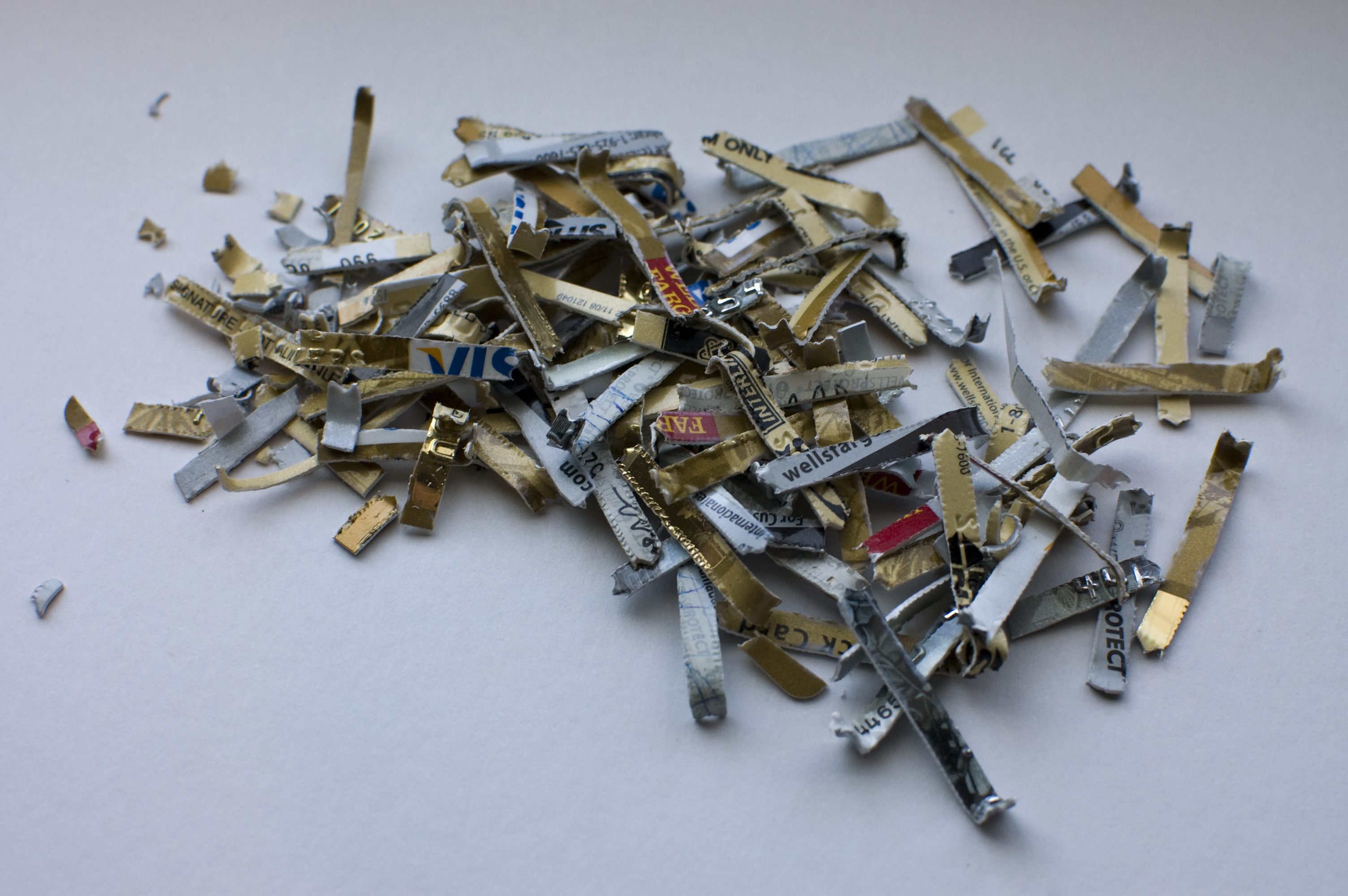
After months of planning our switch to a local credit union, it felt great to shred our Wells Fargo debit cards.


Inspired by Bank Transfer Day and the spirit of the Occupy movement, my wife and I decided late last year to end our relationship with Wells Fargo Bank. We decided that we were fed up with the barrage of new fees and all the hassles that Wells Fargo and the other big banks bring into our financial lives every day. So instead of just sitting back and taking it, we decided to do something about it. We began transitioning our checking and savings business away from Wells Fargo and into a credit union instead.

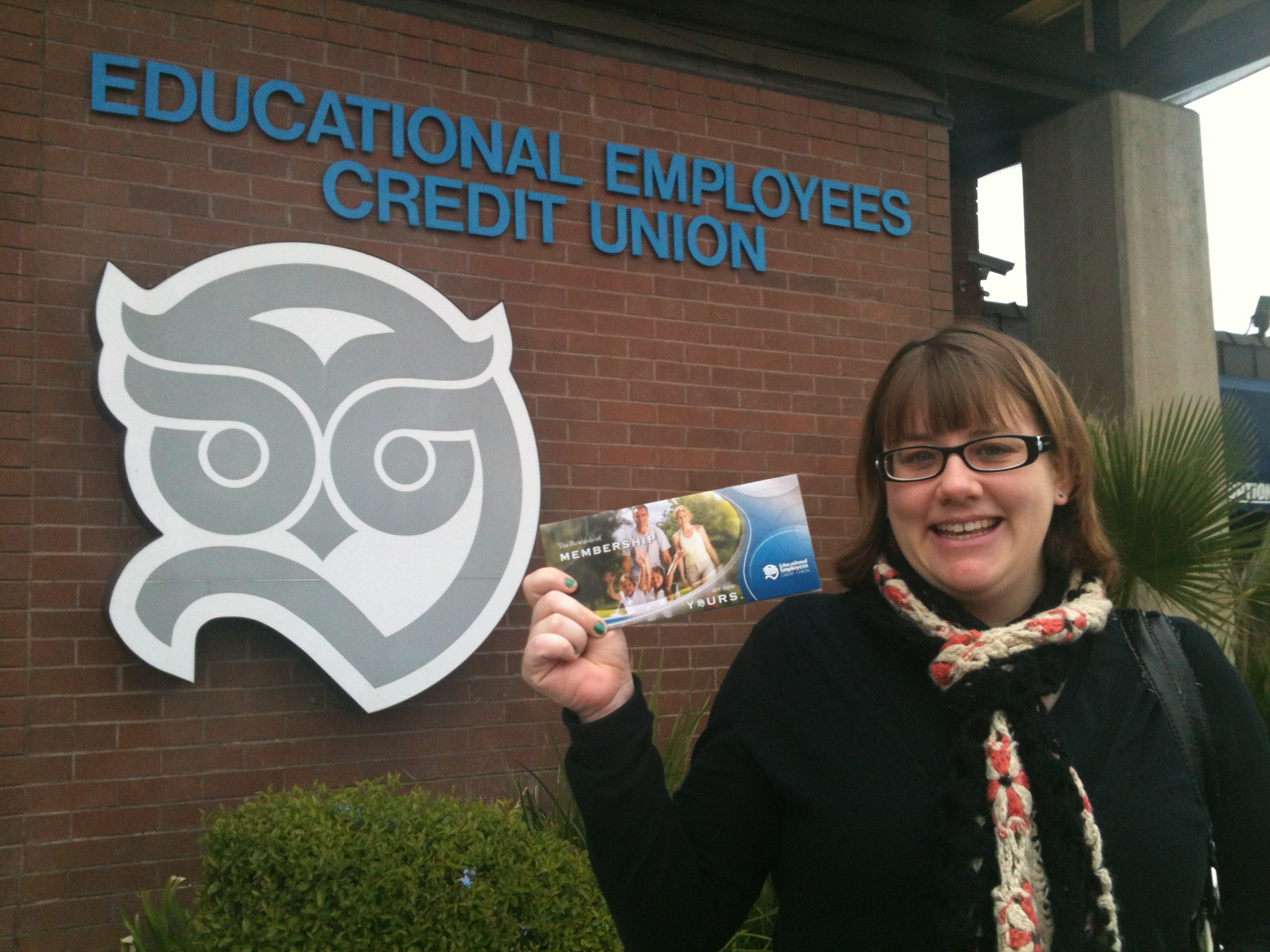
My wife Tracy is all smiles after opening our EECU checking and savings accounts.

After crowdsouring among friends on Facebook for recommendations, we thoroughly researched our local options and looked at what services and specifics they had to offer. We decided to move our money to Educational Employees Credit Union. Since we both teach for State Center Community College District, we easily qualified for EECU membership. We were also pleased that EECU provided an easy-to-use switch kit that detailed the sequence we should follow to make the change. Because both my wife and I piece together our income from so many sources, it took us more than four months to change our direct deposits, our automatic withdrawals, and our bill pay information. In February, we finally had everything in place to take the final step.

Our Wells Fargo cards before shredding.

We walked into our local Wells Fargo branch a week ago to close our checking and savings accounts with them. The whole process took almost a whole hour because they made us wait in two long lines, first to withdraw all of our money and then again to meet with a banker to officially close the accounts. When the banker asked us why we were closing the accounts, I said simply that we preferred to move our money to a local credit union. The banker then snidely called EECU “an okay bank” and made several half-hearted attempts to keep us from closing the account. Here’s a summary of his poor salesmanship:

• The banker said that Wells Fargo had much better branch hours than EECU, which is true. But of course, we do most of our banking online and at the ATM, so the only reason we ever have to go into a branch is when the bank has found a new way to screw us.
• The banker said that Wells Fargo had many more ATM locations than EECU, which is also true. But EECU and other credit unions use the Co-Op Network and most 7-Eleven ATMs are part of that. (And also, duh: That’s why our ATM cards have a VISA logo on them, fool, so we can use them like a credit card anywhere.)
• The banker said that the new Wells Fargo fees could be “taken care of” at the branch if it caused a hardship and if we asked. But why should we have to beg the bank to be good to us? Shouldn’t they just be good to us as a matter of good business?

EECU gave us each a chocolate bar for joining.

In the end, we walked away from our Wells Fargo checking and savings accounts with confidence. We had done our research, and we had carefully considered our needs in putting together the switch. We still have much more work to do, to continue our move away from the big banks. We will continue to keep Wall Street occupied by sending the steady barrage of credit card solicitations we get back to their senders. We will next focus on phasing out our consumer credit cards with both Wells Fargo and Citibank. And the big test will finally be to pry our mortgage from the evil clutches of Bank of America. But for now, though, we feel great about putting our checking and savings money into better hands.

A microwave in the park

This slideshow requires JavaScript.


For the first assignment in my Photo 6 Digital Camera Fundamentals class, the instructor asked us to practice seeing with the camera. We could pick any single subject we wanted to photograph using basic daylight exposures, but it had to be an inanimate object. The purpose of the assignment was to move our way around a stationary subject to see how the compositions and the lighting changed as we moved around it.

There’s a line in one of my favorite Grandaddy songs, “Broken Household Appliance National Forest,” where Jason Lytle sings: “All of the microwaves are dead, just like the salamander said.” Inspired by that line, I decided to take our microwave out into a nearby park. My goal was to juxtapose a piece of common household technology with a scene in nature and see what happened. After testing out a couple of spots and seeing how the lighting presented itself, I placed the microwave on top of a park bench. The concrete bench had the added element of being a manmade structure that rose out of a scar in the earth.

I’m happy with the way the photographs turned out. Using my Nikon D50 digital SLR camera and Nikkor AF-S 35mm f/1.8 prime lens, I diligently made my way around the microwave, capturing its clunky awkwardness. People in the park stared at me strangely, but no one came over to ask what I was doing. The most surprising part of the shoot for me was making photographs of the power plug. The late afternoon sun cast some large shadows across the tip of the plug, making the small three-prong power station seem to loom much larger than its true nature when faced with the outside world.

An ode to George

My hand-me-down Nikon D50 digital SLR camera kit, with a Nikkor AF-S DX 18-55mm f/3.5-5.6 zoom lens.

The first time I took a class from Dr. George A. Flynn at Fresno State, he prowled the length of room 242 in the McKee Fisk building while shouting obscenities at all the “print journalism” students who didn’t subscribe to their local newspaper, The Fresno Bee.
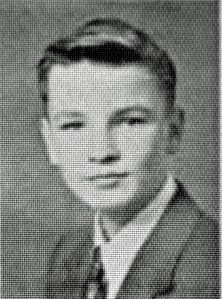
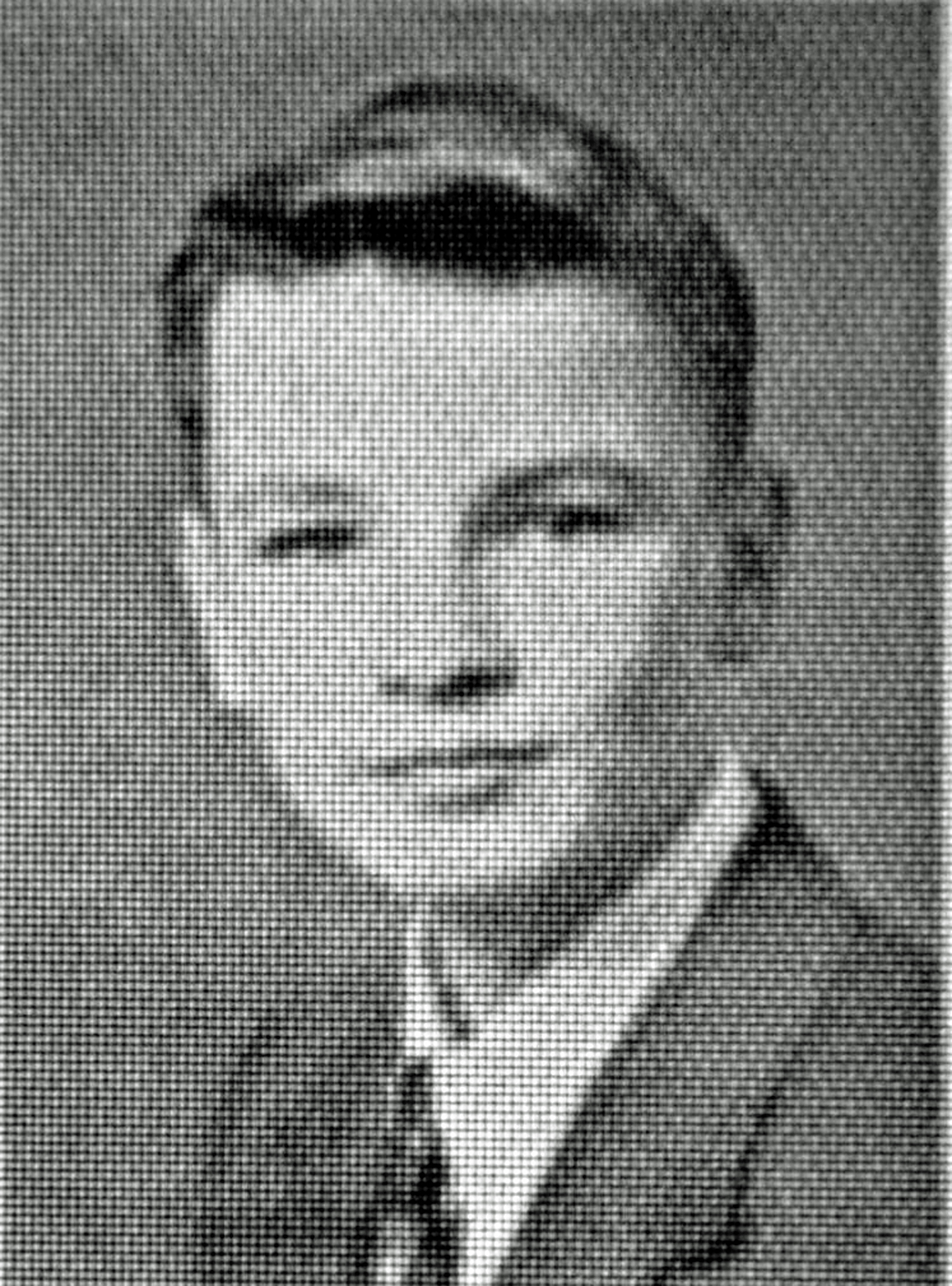
George in 1952 as a high school freshman in Quantico, VA.

It was fall 1995. I was a fifth-year senior embarking on a new appointment as editor-in-chief of Insight, the journalism department’s now-defunct full-sized weekly paper. George was the faculty adviser, and on the second day of class he made the point of insulting each and every student in the class except one– my photographer friend Dan Helmbold, who was an intern at the Clovis Independent at the time– for claiming to aspire to be newspaper journalists without even subscribing to our own local paper. As George flung his stack of subscription cards into the air one by one, yelling while strolling the length of the U-shaped tables while twenty-five students– myself included– stared down into our notebooks with a mix of amusement and shame, I took careful note of what he was trying to say.

Despite his salty tongue, George exposed me to an important reality of professional life. If you really want to be a journalist, you’ve got to study the hell out of journalism every day. Take out “journalist” and “journalism” and replace it with whatever profession you’d like, and you’ve still got essential advice.
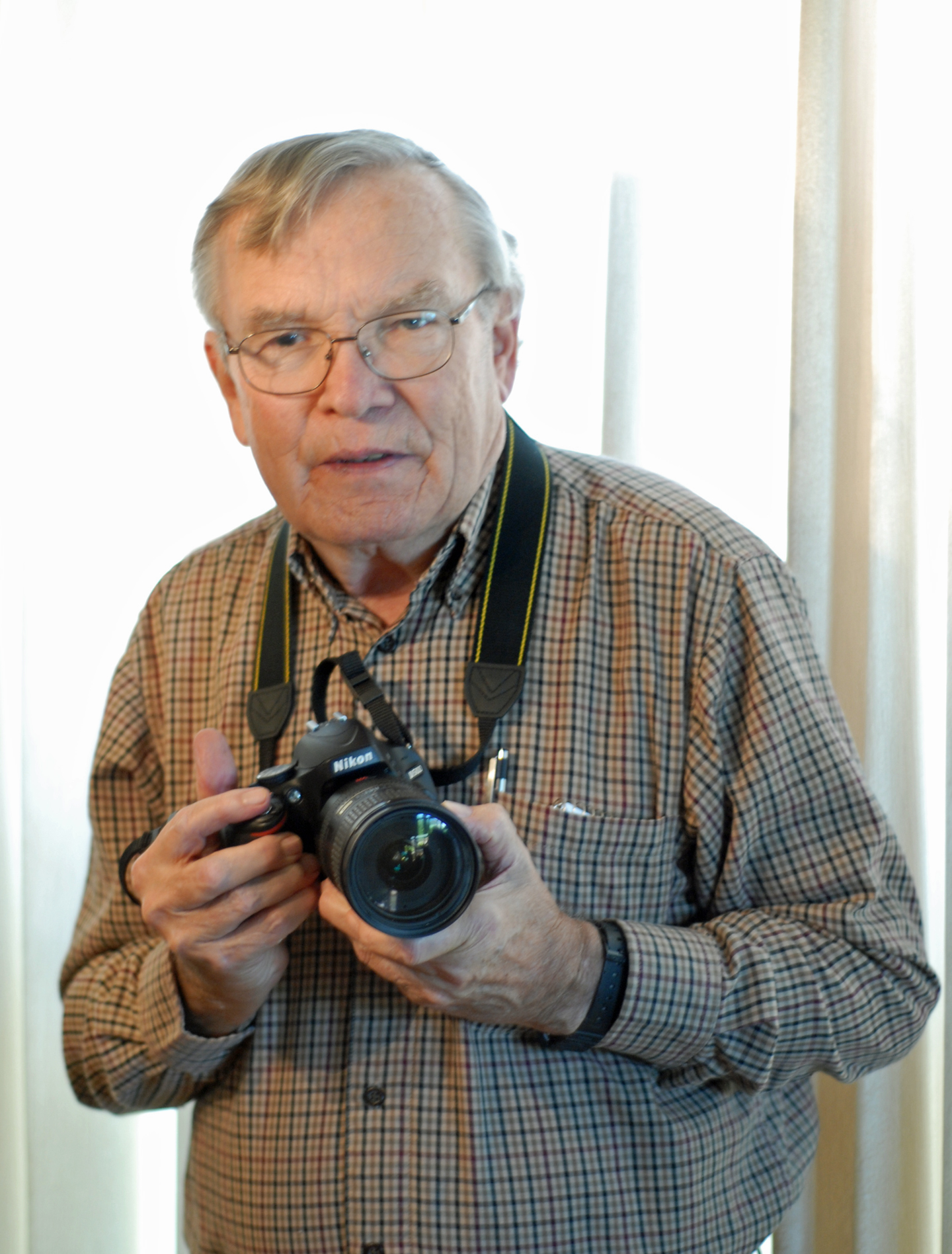
George with his new Nikon D5100, with a Nikkor AF-S DX 18-200mm f/3.5-5.6 zoom lens. Photo by Carol Flynn.

George studied hard to become a professional journalist and educator. He holds a Ph.D. from North Texas State, a master’s from Florida Atlantic, and a bachelor’s from the University of Miami, all in journalism. A Navy man, George worked his way up from copy boy to reporter to editor at the Miami Herald. He taught journalism at Fresno State for 15 years, retiring in 2000. He and his wife, Carol, who is an accomplished special education teacher, have lived in Texas since then, first in Corpus Christi and now in the Sun City neighborhood of Georgetown, north of Austin. George still works as a stringer for the Williamson County Sun, Georgetown’s local newspaper since 1877. He sometimes gets his reporting and photography assignments from Sun editors who are forty years his junior.

Not all students connected with George when he taught at Fresno State. For a while, he drank a lot, and for the longest time he gulped gallons of black coffee and chain-smoked cigarettes. His sharp tongue, coupled with his vices, sometimes didn’t win him fans. But when it came to teaching journalistic writing, I would argue that there are few better than George A. Flynn. His precise, economical writing and editing style epitomizes the very best of crackerjack journalism, a style rich with detail but never bloated. His reporting curiosity focuses on people’s everyday lives, showing the inherent worthiness of the smallest piece of “news” when the story is told well. And his fierce commitment to studying the profession of journalism and its many mutations– from lead type to pagination and now to the Internet– continues to inspire me.
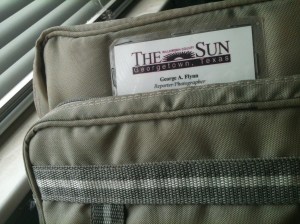
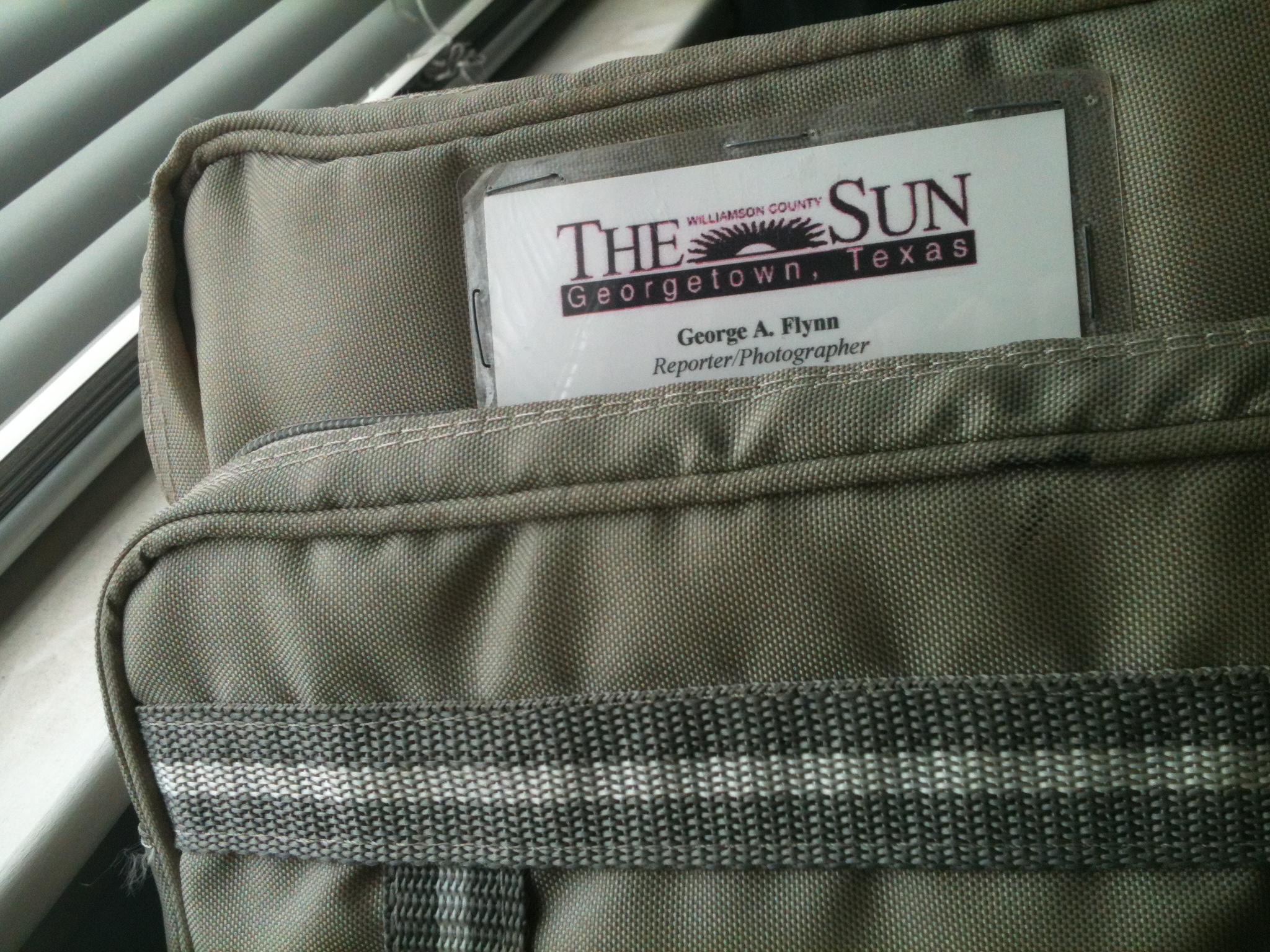
George's old camera bag, which is now mine.

I’ve kept in touch with George over the years, and I’m thankful for it. He continues to nourish me as a mentor and as a friend. When I told him last summer that I would be transitioning away from teaching and instead trying my hand as a freelance multimedia journalist, George gave me his old Nikon D50 digital SLR camera kit. (It’s pictured at the top of this post.) He had just bought a new Nikon D5100 for his stringer work, so he insisted that I have his old D50 as my own starter camera. George even sent me his camera bag to go with it, which still has his old business card affixed to the front. I’ve now started using the D50 this spring for various projects, including the Mural District photo walk I made recently. George said that giving me the old camera was “an investment in the future of journalism.” I hope I can make him proud with what’s to come.