On rivalry, sex, and hidden grief

I’ve said it before and I’ll say it again: I’m thankful for Fresno Filmworks, the local nonprofit that brings independent films each month to the historic Tower Theatre. Filmworks has been on a particularly solid programming run in recent months, starting with their eighth annual festival and continuing with some outstanding recent picks for their monthly first-run series. Here are a few short reviews.

“Footnote”
Directed by:
Joseph Cedar
Format: Big screen
Viewed: Friday 5/11/2012 with my wife at the Tower Theatre in Fresno
At first glance, a film about the deep rivalries between professors of Talmudic studies seems like it’d make a pretty boring movie. But fortunately, the emotional complexity of “Footnote,” an Oscar nominee for Best Foreign Language Film, far exceeds the mind-numbing minutiae of the real academic world. Plus, I always love father-son stories, and director Joseph Cedar turns this one into a real puzzle, with equal parts oddball wit and brutal reality.

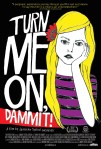
“Turn Me On, Dammit!”
Directed by:
Jannicke Systad Jacobsen
Format: Big screen
Viewed: Friday 6/08/2012 with my wife at the Tower Theatre in Fresno
Everybody loves a good Norwegian sex comedy! Am I right?! This little gem of a coming-of-age film, from first-time director Jannicke Systad Jacobsen, tells the funny, wistful story of Alma, a sex-obsessed teen girl growing up in Nowheresville. The movie, which shows Alma exploring her sexuality through masturbation, phone sex, and various fantasies and embarrassing social situations, was briefly banned in Alabama after protests by religious groups. But I thought such a ban was totally unnecessary, as the film was very sweet and tastefully done.

“Monsieur Lazhar”
Directed by:
Philippe Falardeau
Format: Big screen
Viewed: Friday 7/13/2012 with my wife and our friend Gosia at the Tower Theatre in Fresno
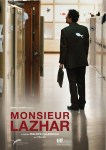
Another Oscar nominee for Best Foreign Language Film, “Monsieur Lazhar” tells the heartbreaking story of an Algerian refugee in Canada who is hired to take over an elementary school classroom after a teacher commits suicide. The opening sequence sets a heavy tone, but the perfect performance of Mohamed Fellag as Monsieur Lazhar brings charm, humor, and great humanity to the film. The ending– a fable within a fable– is abrupt but cathartic, and it reminded me that poetry and beauty can be found in even the darkest moments of grief.
On Kirsten Dunst, Steve Carell, and the end of the world

“Melancholia”
Directed by:
Lars von Trier
Format: DVD from Redbox
Viewed: Tuesday 6/05/2012 with my wife at home

For decades, Hollywood screenwriters have tried to capture, on film, the end of the world. I haven’t seen every apocalypse movie that’s out there, nor do I want to. (There must be explosions! Lots and lots of explosions!) But this summer, I caught two end-of-the-world movies that felt understated and a bit different.

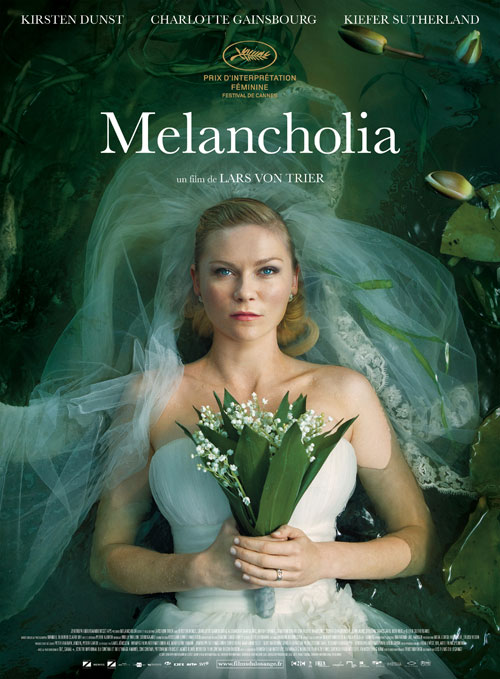
I’ve been a fan of Danish director Lars von Trier since 2000, when my love for Björk led me to see von Trier’s stark musical Dancer in the Dark in the theater. That movie bowled me over with its unconventional style, which communicated a heartbreaking bleakness that I’ve seldom seen on screen. In von Trier’s latest film, “Melancholia,” he operates in a similarly unconventional style throughout. The movie, which opens with a long and beguiling slow-motion sequence, tackles the idea that depressed people react more calmly to stress and catastrophe than those who are, on the surface, more well adjusted.

“Melancholia” tells the story of two sisters: The movie’s first half takes place during one sister’s wedding, and the second half takes place shortly afterward, as the Earth is about to collide with another planet. Kirsten Dunst and Charlotte Gainsbourg play the sisters with sharp contrast. Dunst delivers her finest performance since her role in “The Virgin Suicides,” showing both the snarling ugliness and the calm clarity of depression. Gainsbourg, who I previously knew best from her music collaboration with Beck, provides the perfect foil, showing fearful doubt and fidgety uncertainty. The sisters, alone except for a few other family members at a private estate, experience the end of the world largely in quiet and isolation, a filmmaking move by von Trier that lends a progressively creepy and heavy feeling to the movie’s breathtaking conclusion.

“Seeking a Friend for the End of the World”
Directed by:
Lorene Scafaria
Format: Big screen
Viewed: Friday 6/22/2012 with my wife at the Sierra Vista Cinema 16 in Clovis

A couple weeks later, I saw an apocalypse movie of another kind: “Seeking a Friend for the End of the World,” which is actually a romantic comedy, if you can believe it. The movie is directed by Lorene Scafaria, a young filmmaker who so far likes to make boy-meets-girl flicks for the semi-indie crowd. After seeing “Melancholia,” I didn’t expect much from a rom-com that starred Steve Carell and Keira Knightley as neighbors brought together in an unlikely end-of-the-world love relationship. But even though “Seeking a Friend” was pretty glossy Hollywood and the writing was a bit generic at a few points, it had many sweet and funny moments. Ultimately, I thought the heart of the movie was really ambitious and well done.

The film got me thinking about Steve Carell, who is best known for his TV role as a bumbling boss in “The Office,” and who has starred in a number of Hollywood hits in the past decade. Carell plays the lead role in many of his films as an aww-shucks everyman that we can’t help but love despite his tics. There are definitely elements of this typecast that follow him throughout “Seeking a Friend,” as Scafaria’s script sometimes veers toward the predictable. So, to use von Trier’s binary, Carell shows just enough sadness and just enough strength to elevate his performance to something special. His character is named “Dodge” for a reason, and of course you can’t dodge the apocalypse in the end.

Movie review: “Moonrise Kingdom”

“Moonrise Kingdom”
Directed by:
Wes Anderson
Format: Big screen
Viewed: Sunday 6/24/2012 with my wife at the Edwards Fresno Stadium 22

Wes Anderson movies always have me at hello. His latest masterpiece, “Moonrise Kingdom,” was no exception. I loved following the adventure of the two 12-year-old outcasts, Sam and Suzy, as they fall in love and run away together. As the bumbling cadre of townspeople– a strange assortment of characters that only Anderson could conjure– closes in on the runaway lovebirds, my heart filled with true joy for cinema.

So, in the spirit of Wes Anderson whimsy, I thought I’d ask my Facebook friends for a little help in reviewing the movie. Here are their short (and mostly positive) reviews:

— “Moonrise Kingdom is the childhood you’d wished you’d had.”

— “Wes Anderson finally found the most natural choice of group for his aesthetic– boy scouts!”

— “The film felt like a collage of all his other films, and I enjoyed the slow ride through Andersonville. (Not the infamous Civil War prison Andersonville, but an imaginary town composed of all of Wes Anderson’s films.)”

— “I liked it.”

— “Visually I was very interested and entertained, and I thought the art direction was some of the best of any of his films, but the story didn’t keep me interested.”

— “Binoculars. They’re my super power.”

— “The charm of Wes Anderson films is their ability to leave your heart feeling half empty and half full, and this one was no exception.”

— “Your first love is like the first time you get your ears pierced.”

— “Moonrise Kingdom, starring Li’l Lana Del Rey.”

— “I wish I could have seen the film when I was 12.”

Please feel free to leave your one-sentence reviews in the comments.

Movie reviews: A submarine, a pope, and some skin

After falling off the blog wagon for nearly two months this past spring, I’m finally almost caught up with writing and posting reviews of all the movies I’ve seen lately. In the spirit of my spring break movie binge, a glorious three days at the Fresno Film Festival, and a brief study of Georges Méliès, here are a few short reviews of films I watched at the start of summer.

“We Have a Pope”
Directed by:
Nanni Moretti
Format: Big screen
Viewed: Wednesday 5/30/2012 with my wife at the Palm Theatre in San Luis Obispo
My wife and I always try to see a movie at the gorgeous old Palm Theatre whenever we trek to the central coast. On this trip, we caught this odd little Italian picture that tells the story of a man who is chosen to be the new pope– but he refuses. There are tons of funny moments, many involving a Vatican-appointed, non-Catholic psychotherapist and his attempts to understand the impossible situation. (Watch for the therapist organizing a terrific and uplifting volleyball tournament among members of the conclave!) Blasphemous? Yes. But it is also a profound meditation on faith and uncertainty.

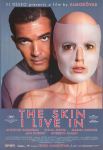
“The Skin I Live In”
Directed by:
Pedro Almodóvar
Format: DVD from Redbox
Viewed: Sunday 6/03/2012 with my wife at home
I have never seen an Almodóvar that I haven’t loved– until this one. Antonio Banderas plays a plastic surgeon gone mad who experiments relentlessly with a human guinea pig. In an effort to make the perfect skin, the surgeon ignores ethics and becomes an emotional maniac capable of many cringe-worthy acts. Almodóvar’s latest is definitely a well-made film, but I thought its heart was ugly and downright creepy.

“Submarine”
Directed by:
Richard Ayoade
Format: DVD from Redbox
Viewed: Tuesday 5/29/2012 with my wife at home
This little gem caught my eye on Redbox, and I enjoyed it a lot even though I’d never heard of it before. The movie is kind of a twee British version of a Wes Anderson flick, with the young protagonist, Oliver, at the heart of the shenanigans. Oliver’s own failed attempts at relationships mirror the failed relationships all around him, and some of the scenes between Oliver and his emotionally paralyzed father are quite heartbreaking. The ending is a bit Hollywood, but the film’s quirky honesty is fun and smart.

On Georges Méliès and movie magic

I’ve been teaching the intro to mass communication survey course at Fresno City College for three years now, and one of my favorite chapters to teach is the one on film. After a section of introductory material and a section on print media, the movie chapter is the first in our textbook’s section on visual media, and my students always respond to it with gusto. (The kids love the multimedia, I always say!) This past semester, I added the Michel Gondry film “Be Kind Rewind” to the class and we had lively debates about imagination, poverty, and the effects of the film industry’s blockbuster mentality.

The movie chapter introduces several key figures in the early development of movies, and I always delight in showing students YouTube clips from Edwin Porter’s “The Great Train Robbery” and D.W. Griffith’s controversial “The Birth of a Nation.” But my favorite clip to show is from “A Trip to the Moon” by Georges Méliès, one of the first masters of special effects in the movies. When my students try to transport themselves back more than a century while watching these clips, to a time when moving pictures were just invented, I often see their own imaginations start to spark.

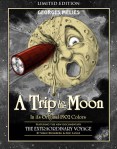
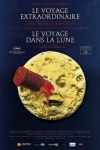
Thanks to the good people at Fresno Filmworks, I now know much, much more about Méliès and his famous voyage into space. As part of this past spring’s Fresno Film Festival, I had the chance to see the excellent new documentary “The Extraordinary Voyage” along with a brand new, hand-colored, and restored version of “A Trip to the Moon.” The experience of seeing both on the big screen at the Tower Theatre was truly once in a lifetime.

As part of my monthly freelance work for Filmworks, I gleefully compiled the copy for their festival program. Here’s the description I wrote for “A Trip to the Moon” …

Directed by Georges Méliès, the revered French filmmaker and illusionist who pioneered the use of special effects in the world’s earliest movies, the classic silent film “A Trip to the Moon” remains a cinematic landmark. The story depicts the first outer-space adventure in the history of cinema, as six members of the Astronomers’ Club set off on an expedition to the moon, encounter the Selenites and flee their king, and return home to a triumphant parade. The long-lost, hand-painted color version of the film– unseen for more than 100 years until its glorious new restoration– has inspired audiences worldwide. Featuring a newly imagined modern soundtrack by the French band Air.

And here’s the description I wrote for “The Extraordinary Voyage” …

Cinema’s most unforgettable image is perhaps that of the Man in the Moon being poked in the eye by a rocket ship. The documentary “The Extraordinary Voyage” examines the magical work of Georges Méliès, the creator of that image and one of the celebrated heroes of Martin Scorsese’s Oscar-winning movie “Hugo.” Now, thanks to one of the most technically sophisticated and expensive restorations in film history, “A Trip to the Moon” can thrill audiences anew. The documentary charts the film’s voyage across an entire century, from the fantastical production in 1902 to the astonishing rediscovery of a color print in 1993, to the premiere of the new restoration at the 2011 Cannes Film Festival.

I capped my spring study of Monsieur Méliès by renting “Hugo” via Redbox. My wife and I watched it together at home, and we were both quite taken by Scorsese’s charming and whimsical filmmaking throughout. While “Hugo” and the novel it’s adapted from take a few historical liberties with the true backstory of Méliès, the film transported me into the past as wondrously as “A Trip to the Moon” itself. “Hugo” truly filled up my heart with the joy and discovery of the movies, and I can’t wait to share that feeling with future students.