Radio story: Smart growth


A few years ago, when I taught the in-depth reporting class for Fresno State’s journalism department, I used to tell young reporters that if they really wanted to understand the news, they’d better start attending planning commission meetings. They would all predictably laugh, but then I’d show them some sample agendas from the campus, city, and county planning commissions to convince them how serious I was being. After reviewing those agendas, I asked students to then use published news reports and public document searches to track how some of those agenda items unfolded. Analyzing the outcomes showed students the influence that the planning commission has on public policy and everyday life.

I’ve never much liked going to government meetings, myself. (As some might say: Those who can’t do, teach!) But last summer as an intern at KQED Public Radio, I was asked to work on a complex public policy story with my colleague Sasha Khokha. We took a look at “smart growth”– a city planning strategy that calls for densely built areas of homes near public transit, with lots of walking and biking space– and how the car-loving, largely suburban Central Valley was responding to its many challenges. The story was part of KQED’s excellent Miles To Go series about sustainable growth statewide, put together by the station’s Climate Watch science and public policy reporting team.

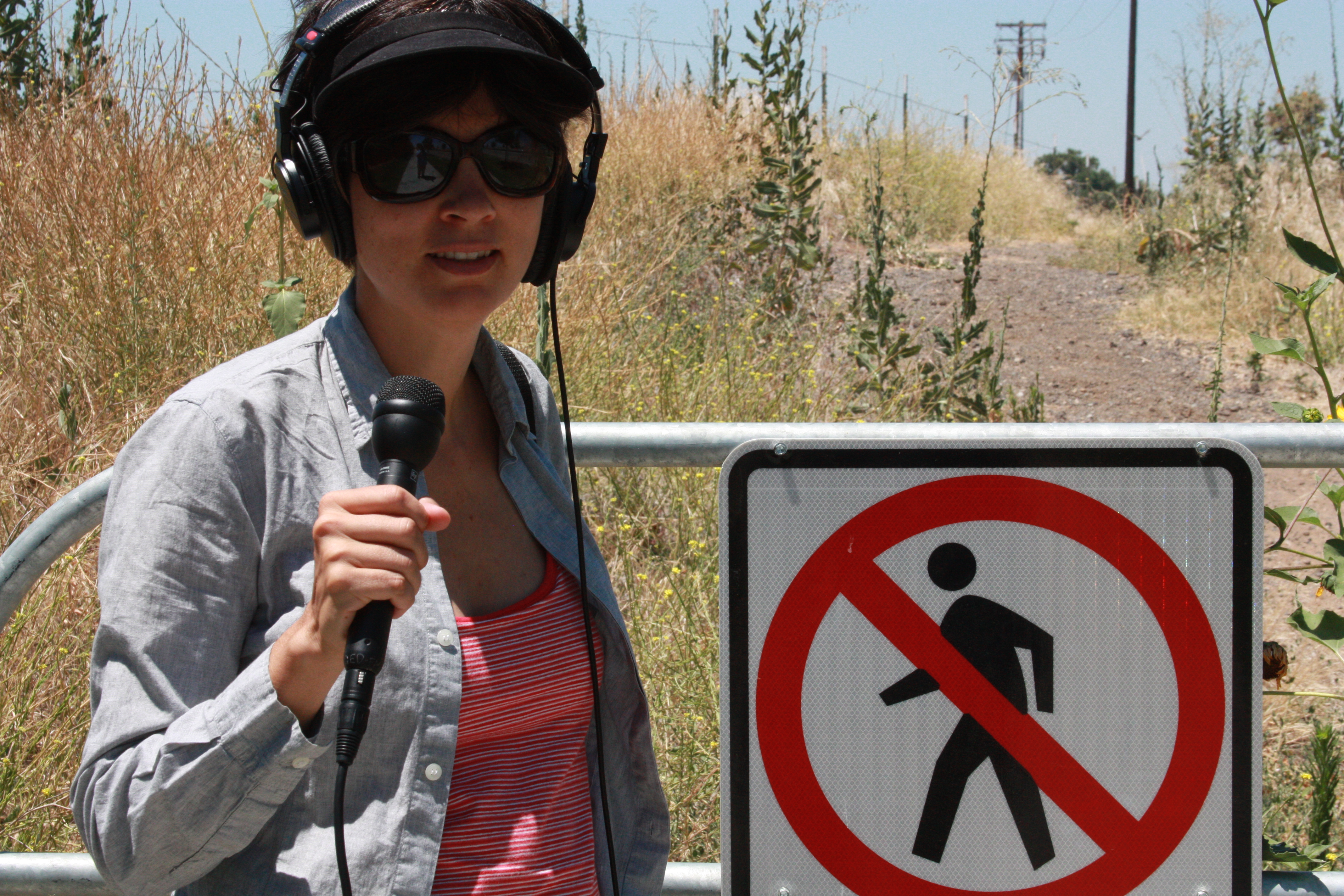
The story took us nearly two months to research and put together. Sasha handled most of the interviewing, and she wrote and voiced the radio piece. I handled most of the research– which included reviewing government documents and reports related to smart growth– and I produced a blog post that included a photo gallery with captions, an interactive map, links, and an unplanned but lively discussion with KQED listeners in the comments section. I also earned credit as a field producer on Sasha’s radio piece, as I oversaw the details of Sasha’s 4.8-mile walk from the Harlan Ranch smart growth development to the nearest supermarket. That’s Sasha with her radio gear in the photograph above, standing where the sidewalk ends.

Last week, about one year to the day from when we started working on the story, I drove out to Harlan Ranch in northeast Clovis to see how far the development had come since Sasha and I visited last summer. I was shocked to see an explosion of new homes– hundreds more new homes finished than before, many of them already occupied or sold, the development creeping steadily eastward to where Freeway 168 stops being a freeway between Tollhouse Road and Shepherd Avenue and then heads for the hills. There was still no sight of the planned shopping center inside the development, but I knew that part of the plan could take a decade or more to come to fruition. People who live there still have to drive out to get to a bus stop, a gas station, or a pharmacy.

There was lots of change, but also not much change. When I thought more about it, I wasn’t all that surprised. Planners had given the green light to build there, and that’s what the developers were doing. After that, people were still lining up to move in. I learned a new lesson about the planning commission: Sometimes the story isn’t over for many, many years.
Movie reviews: A submarine, a pope, and some skin

After falling off the blog wagon for nearly two months this past spring, I’m finally almost caught up with writing and posting reviews of all the movies I’ve seen lately. In the spirit of my spring break movie binge, a glorious three days at the Fresno Film Festival, and a brief study of Georges Méliès, here are a few short reviews of films I watched at the start of summer.

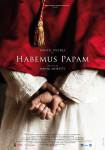
“We Have a Pope”
Directed by:
Nanni Moretti
Format: Big screen
Viewed: Wednesday 5/30/2012 with my wife at the Palm Theatre in San Luis Obispo
My wife and I always try to see a movie at the gorgeous old Palm Theatre whenever we trek to the central coast. On this trip, we caught this odd little Italian picture that tells the story of a man who is chosen to be the new pope– but he refuses. There are tons of funny moments, many involving a Vatican-appointed, non-Catholic psychotherapist and his attempts to understand the impossible situation. (Watch for the therapist organizing a terrific and uplifting volleyball tournament among members of the conclave!) Blasphemous? Yes. But it is also a profound meditation on faith and uncertainty.

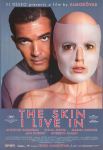
“The Skin I Live In”
Directed by:
Pedro Almodóvar
Format: DVD from Redbox
Viewed: Sunday 6/03/2012 with my wife at home
I have never seen an Almodóvar that I haven’t loved– until this one. Antonio Banderas plays a plastic surgeon gone mad who experiments relentlessly with a human guinea pig. In an effort to make the perfect skin, the surgeon ignores ethics and becomes an emotional maniac capable of many cringe-worthy acts. Almodóvar’s latest is definitely a well-made film, but I thought its heart was ugly and downright creepy.

“Submarine”
Directed by:
Richard Ayoade
Format: DVD from Redbox
Viewed: Tuesday 5/29/2012 with my wife at home
This little gem caught my eye on Redbox, and I enjoyed it a lot even though I’d never heard of it before. The movie is kind of a twee British version of a Wes Anderson flick, with the young protagonist, Oliver, at the heart of the shenanigans. Oliver’s own failed attempts at relationships mirror the failed relationships all around him, and some of the scenes between Oliver and his emotionally paralyzed father are quite heartbreaking. The ending is a bit Hollywood, but the film’s quirky honesty is fun and smart.

As seen through a filter

This slideshow requires JavaScript.

This past spring, I took an intro to Photoshop class at Fresno City College. It was a frustrating experience overall, mostly because the program itself has grown so gargantuan and counter-intuitive over the years that it takes a long, long time to come anywhere near mastering it. My instructor joked that there would probably someday be a Ph.D. in Photoshop, and that no single person would ever know everything there was to know about it. So, I accepted early on that nothing I could learn about Photoshop in just 18 weeks would give me more than a cursory introduction. That said, I was happy to discover and practice many of the basics. I can now make passable basic photo adjustments for color and tonality, black-and-white conversion, dodging and burning, blemishes, and restorations.

For one assignment, the instructor asked us to go out and make photographs all over campus– the biggest variety of photos we could make in an hour or so– and then come back to the lab, edit down the shoot, and then experiment by applying Photoshop filters on our final picks. The Fresno City College campus, dotted with greenery, walking paths, and older buildings, provided a gorgeous subject to photograph, especially in the golden hour when these photos were made. I had a lot of fun not only making the photos in the field, but I also enjoyed playing with the dozens of filters available in Photoshop CS5. My favorites images from the assignment are presented in the slideshow here.

I’ve read a fair number of articles lately about how Photoshop filters and mobile apps like Instagram have destroyed creativity in photography with their blurry, fuzzy realities. Prominent editors at places like National Geographic have even urged photographers to please stop using software filters altogether. I understand and agree with some of those arguments, especially when it comes to photojournalism, so in my own work I have mostly stuck with the idea that if you can’t do it in the darkroom you probably shouldn’t be doing it in Photoshop or some other program.

But of course, there are exceptions. I do love to play with Instagram filters because they’re fun, low risk, and built primarily for instant sharing via social media, rather than for more formal photography. And newspapers and magazines for years have used sepia tone and other alternative processes– both in the darkroom and in Photoshop– to give certain photographs an intentionally old or weathered look. I still believe that the primary measure of quality in a photograph will always come down to the composition. But as software continues to evolve, perhaps so will our attitudes about seeing through a filter.

On Georges Méliès and movie magic

I’ve been teaching the intro to mass communication survey course at Fresno City College for three years now, and one of my favorite chapters to teach is the one on film. After a section of introductory material and a section on print media, the movie chapter is the first in our textbook’s section on visual media, and my students always respond to it with gusto. (The kids love the multimedia, I always say!) This past semester, I added the Michel Gondry film “Be Kind Rewind” to the class and we had lively debates about imagination, poverty, and the effects of the film industry’s blockbuster mentality.

The movie chapter introduces several key figures in the early development of movies, and I always delight in showing students YouTube clips from Edwin Porter’s “The Great Train Robbery” and D.W. Griffith’s controversial “The Birth of a Nation.” But my favorite clip to show is from “A Trip to the Moon” by Georges Méliès, one of the first masters of special effects in the movies. When my students try to transport themselves back more than a century while watching these clips, to a time when moving pictures were just invented, I often see their own imaginations start to spark.

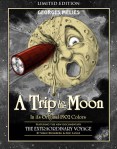
Thanks to the good people at Fresno Filmworks, I now know much, much more about Méliès and his famous voyage into space. As part of this past spring’s Fresno Film Festival, I had the chance to see the excellent new documentary “The Extraordinary Voyage” along with a brand new, hand-colored, and restored version of “A Trip to the Moon.” The experience of seeing both on the big screen at the Tower Theatre was truly once in a lifetime.

As part of my monthly freelance work for Filmworks, I gleefully compiled the copy for their festival program. Here’s the description I wrote for “A Trip to the Moon” …

Directed by Georges Méliès, the revered French filmmaker and illusionist who pioneered the use of special effects in the world’s earliest movies, the classic silent film “A Trip to the Moon” remains a cinematic landmark. The story depicts the first outer-space adventure in the history of cinema, as six members of the Astronomers’ Club set off on an expedition to the moon, encounter the Selenites and flee their king, and return home to a triumphant parade. The long-lost, hand-painted color version of the film– unseen for more than 100 years until its glorious new restoration– has inspired audiences worldwide. Featuring a newly imagined modern soundtrack by the French band Air.

And here’s the description I wrote for “The Extraordinary Voyage” …

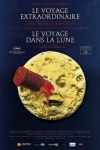
Cinema’s most unforgettable image is perhaps that of the Man in the Moon being poked in the eye by a rocket ship. The documentary “The Extraordinary Voyage” examines the magical work of Georges Méliès, the creator of that image and one of the celebrated heroes of Martin Scorsese’s Oscar-winning movie “Hugo.” Now, thanks to one of the most technically sophisticated and expensive restorations in film history, “A Trip to the Moon” can thrill audiences anew. The documentary charts the film’s voyage across an entire century, from the fantastical production in 1902 to the astonishing rediscovery of a color print in 1993, to the premiere of the new restoration at the 2011 Cannes Film Festival.

I capped my spring study of Monsieur Méliès by renting “Hugo” via Redbox. My wife and I watched it together at home, and we were both quite taken by Scorsese’s charming and whimsical filmmaking throughout. While “Hugo” and the novel it’s adapted from take a few historical liberties with the true backstory of Méliès, the film transported me into the past as wondrously as “A Trip to the Moon” itself. “Hugo” truly filled up my heart with the joy and discovery of the movies, and I can’t wait to share that feeling with future students.

An object in motion

This slideshow requires JavaScript.

For the second assignment in my Photo 6 Digital Camera Fundamentals class this past spring, the instructor asked us to practice controlling motion by using manual camera controls for shutter speed and aperture. We could photograph any one subject to produce a series of eight photographs that showed a range of motion with the camera sitting still and eight photographs that showed a range of motion with the camera moving. The purpose of the assignment was to apply basic manual settings to produce blur shots and panning shots.

I enlisted the help of my good friend Eric Parker for the project. Eric teaches writing and literature courses at the University of Alabama, but he’s in Fresno for several months working on his book project. I’ve known Eric since 2004 and he has almost always chosen to be a bicycle rider, partly for financial reasons but mostly for environmental reasons. So, I invited Eric over to my house and asked him to hop on my wife’s Raleigh Special cruiser and pedal back and forth on our street in front of Cary Park. We found a nice spot about halfway down the street with a sign at the edge of the park that reads: No Vehicles on the Lawn. I thought that would make a nice juxtaposition of man vs. nature to frame each photograph in the series.

To make the photos, I again used my hand-me-down Nikon D50 digital SLR camera and Nikkor AF-S 35mm f/1.8 prime lens. We got a few strange looks from neighbors passing by in their cars, but for the most part Eric just rode up and down the street about 30 times as I stood nearby manually making exposures at different settings, one by one. My favorite photograph in the motion series is the one made at 1/30 of a second; my favorite in the panning series is the one at 1/8 of a second.

The full set reminded me of Newton’s laws of motion: basically, an object in motion stays in motion unless the object is acted upon by some outside force. I think Newton’s laws are good reminders for creative types like Eric and me, trying to figure out how to make it as freelance writers/teachers/artists. If we keep moving, the only thing that can stop us is the lens in which we view ourselves.