An ode to George

My hand-me-down Nikon D50 digital SLR camera kit, with a Nikkor AF-S DX 18-55mm f/3.5-5.6 zoom lens.

The first time I took a class from Dr. George A. Flynn at Fresno State, he prowled the length of room 242 in the McKee Fisk building while shouting obscenities at all the “print journalism” students who didn’t subscribe to their local newspaper, The Fresno Bee.
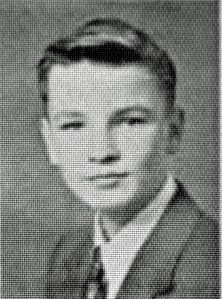
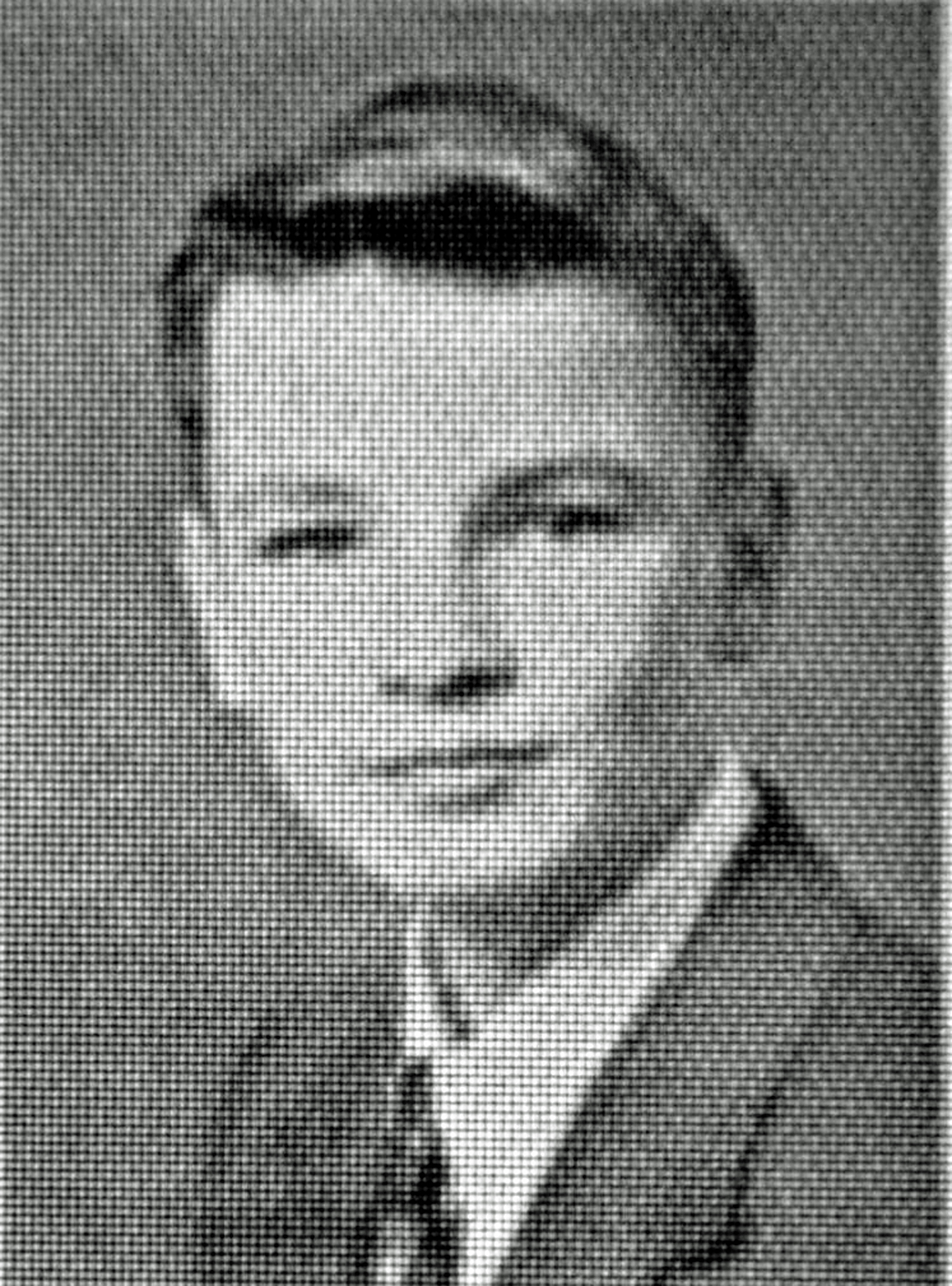
George in 1952 as a high school freshman in Quantico, VA.

It was fall 1995. I was a fifth-year senior embarking on a new appointment as editor-in-chief of Insight, the journalism department’s now-defunct full-sized weekly paper. George was the faculty adviser, and on the second day of class he made the point of insulting each and every student in the class except one– my photographer friend Dan Helmbold, who was an intern at the Clovis Independent at the time– for claiming to aspire to be newspaper journalists without even subscribing to our own local paper. As George flung his stack of subscription cards into the air one by one, yelling while strolling the length of the U-shaped tables while twenty-five students– myself included– stared down into our notebooks with a mix of amusement and shame, I took careful note of what he was trying to say.

Despite his salty tongue, George exposed me to an important reality of professional life. If you really want to be a journalist, you’ve got to study the hell out of journalism every day. Take out “journalist” and “journalism” and replace it with whatever profession you’d like, and you’ve still got essential advice.
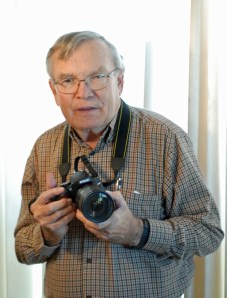
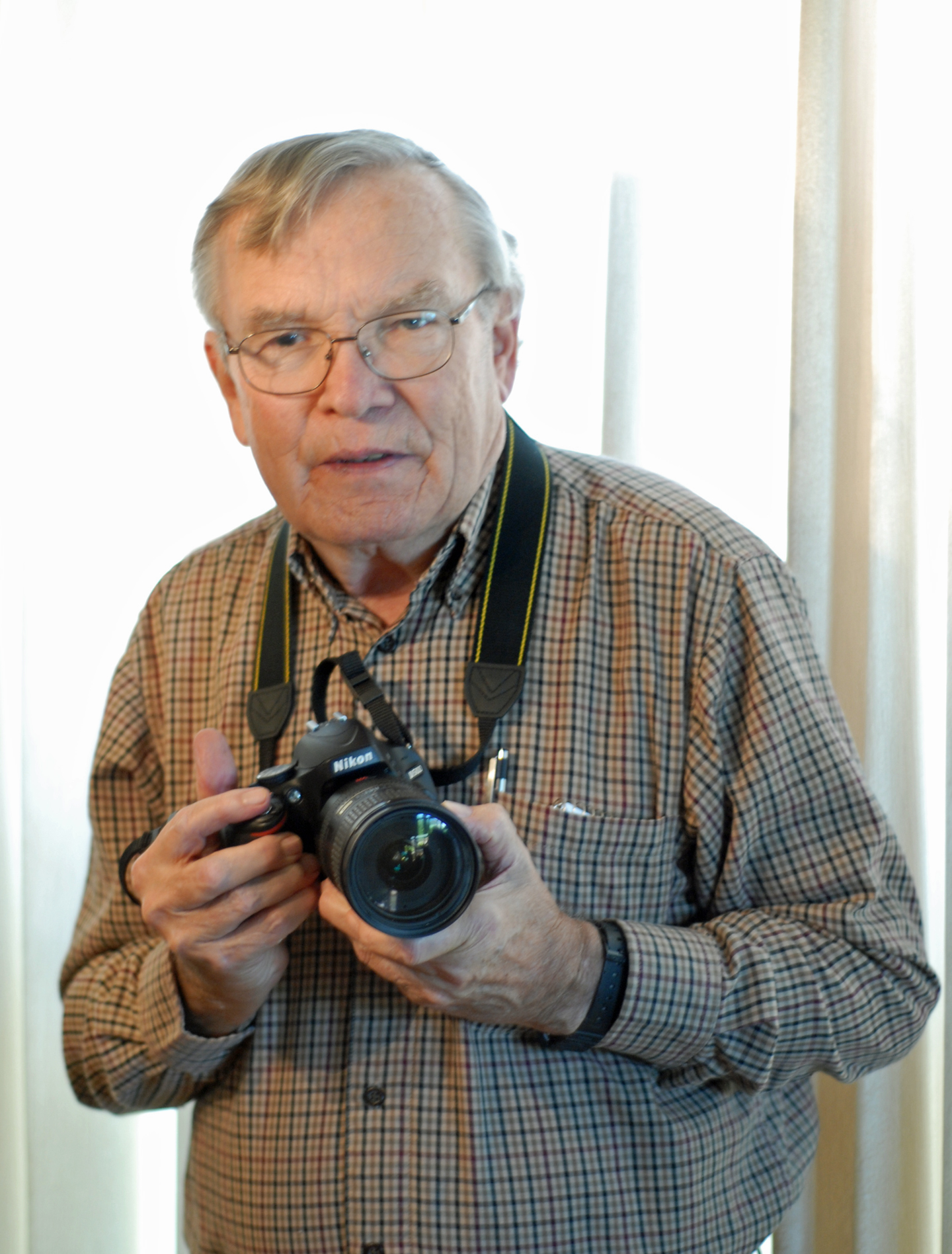
George with his new Nikon D5100, with a Nikkor AF-S DX 18-200mm f/3.5-5.6 zoom lens. Photo by Carol Flynn.

George studied hard to become a professional journalist and educator. He holds a Ph.D. from North Texas State, a master’s from Florida Atlantic, and a bachelor’s from the University of Miami, all in journalism. A Navy man, George worked his way up from copy boy to reporter to editor at the Miami Herald. He taught journalism at Fresno State for 15 years, retiring in 2000. He and his wife, Carol, who is an accomplished special education teacher, have lived in Texas since then, first in Corpus Christi and now in the Sun City neighborhood of Georgetown, north of Austin. George still works as a stringer for the Williamson County Sun, Georgetown’s local newspaper since 1877. He sometimes gets his reporting and photography assignments from Sun editors who are forty years his junior.

Not all students connected with George when he taught at Fresno State. For a while, he drank a lot, and for the longest time he gulped gallons of black coffee and chain-smoked cigarettes. His sharp tongue, coupled with his vices, sometimes didn’t win him fans. But when it came to teaching journalistic writing, I would argue that there are few better than George A. Flynn. His precise, economical writing and editing style epitomizes the very best of crackerjack journalism, a style rich with detail but never bloated. His reporting curiosity focuses on people’s everyday lives, showing the inherent worthiness of the smallest piece of “news” when the story is told well. And his fierce commitment to studying the profession of journalism and its many mutations– from lead type to pagination and now to the Internet– continues to inspire me.
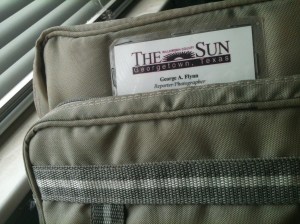
George's old camera bag, which is now mine.

I’ve kept in touch with George over the years, and I’m thankful for it. He continues to nourish me as a mentor and as a friend. When I told him last summer that I would be transitioning away from teaching and instead trying my hand as a freelance multimedia journalist, George gave me his old Nikon D50 digital SLR camera kit. (It’s pictured at the top of this post.) He had just bought a new Nikon D5100 for his stringer work, so he insisted that I have his old D50 as my own starter camera. George even sent me his camera bag to go with it, which still has his old business card affixed to the front. I’ve now started using the D50 this spring for various projects, including the Mural District photo walk I made recently. George said that giving me the old camera was “an investment in the future of journalism.” I hope I can make him proud with what’s to come.
Movie Monday: Oscar shorts 2012

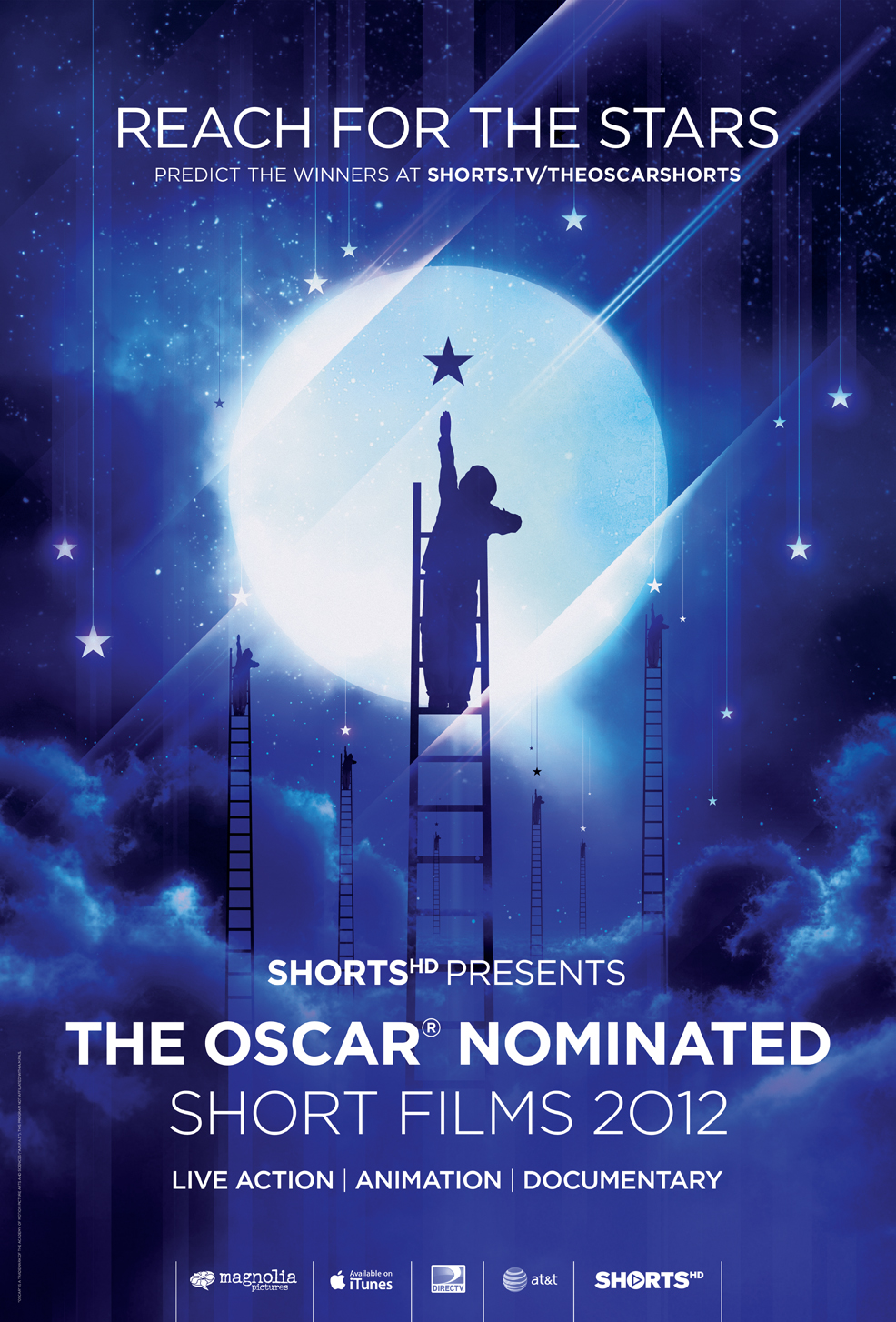
Oscar Nominated Short Films 2012
Format:
Big screen
Viewed: Friday 2/10/2012 with my wife and our friend Gosia at the Tower Theatre in Fresno

For the seventh year in a row this year, Fresno Filmworks brought the Oscar nominated short films to the big screen here in the Central Valley. I’m thankful each month for the good job Filmworks does to screen independent movies here, in a region without an indie moviehouse. But I’m particularly thankful each year for the chance to see the Oscar shorts. There’s a lot of incredible filmmaking going on in the world, and the short form really shows off a filmmaking team’s ability to capture a simple idea in a way that captivates. It’s super tough to pack so much meaning into every line, every shot. The Oscar shorts, to me, are always impressive in their concision and their vision.

The 2012 live action nominees delivered a lot of laughs but with serious undertones. My favorite was “Tuba Atlantic,” a Norwegian film directed by Hallvar Witzø. The movie told the story of Oskar, a dying fisherman trying to make peace with his estranged brother, and his interactions with Inger, an “Angel of Death” that the local Jesus club sends to keep Oskar company in his final days. The movie was beautifully shot, its touches of magic realism were inspiring, and it left me with a profound sense of loss while also making me laugh and laugh. A great little film.

The 2012 animation nominees also took on serious topics but delivered them with comedic punch lines. My favorite was “A Morning Stroll,” a British film directed by Grant Orchard. The movie told the story of an archetypal New Yorker and an unusual neighbor–a plucky little chicken. I won’t give away too much more about the movie because it relies on the element of surprise. But this trailer will give you a glimpse of their interactions. The film left me absolutely delighted– and isn’t that what movies are supposed to do?

Mural District photo walk

This slideshow requires JavaScript.

On the morning of Feb. 10, 2012, I went on a self-assigned photo walk in the Mural District in downtown Fresno. I collaborated again with my friend Joseph Edgecomb, who previously went on a photo walk with me at the Big Fresno Flea Market last summer. It was my first photo walk of the new year, and I wanted to try out a bunch of new camera skills that I’ve been practicing in my photo classes at Fresno City College.

This was the first photo walk I’ve taken with my new hand-me-down Nikon D50 digital SLR camera. I used a Nikkor AF-S 35mm f/1.8 prime lens. For the first time, I made all of my exposures using manual settings. I did a lot of bracketing of exposures while in the field, and I tried different exposure combinations on each composition. Also for the first time, I shot the photos in a raw format rather than in JPEG to allow for maximum quality. That allowed me to practice some of my new editing techniques in Photoshop, including the fixing of blemishes with the clone stamp, spot healing brush, and dodge/burn tools, as well as making basic color adjustments.

I loved walking around the Mural District. There is so much new development going on down there, driven by the Assemi family and GV Urban among others. There is also an amazing juxtaposition of new and old throughout the entire area, as renovations pop up alongside, inside, and outside of what has been there before. It’s easy to spot the murals, of course, but it’s also fun to think about what already exists on the streets as a kind of urban art, too. After a while, the mural art and the non-mural art seem to form this seamless mix of visual inspiration.

Check out Joseph’s excellent gallery to compare and contrast with mine.

Movie Monday: “The Artist”

“The Artist”
Directed by:
Michel Hazanavicius
Format: Big screen
Viewed: Sunday 1/29/2012 with my wife at the Sierra Vista in Clovis

It’s rare for me to walk out of a movie theater feeling truly inspired by a film. But after seeing this year’s Golden Globe winner for best picture, “The Artist,” I felt like a million bucks.

“The Artist” is a gorgeously shot silent film that contrasts the declining days of an accomplished silent film star with the rise of a young actress at the dawn of the talkies. Actor Jean Dujardin plays the lead with such magnetism and grace that it’s easy to see why critics call him the French George Clooney. Argentine actress Bérénice Bejo absolutely glows as the character Peppy Miller, the film’s delightful heroine. The duo of Dujardin and Bejo cast a charming spell over the entire film. Director Michel Hazanavicius cast Dujardin as his star in the OSS 117 spy movie spoofs, and he is married to Bejo. That closeness to his principle actors and his incredible attention to cinematic detail yields a magical movie.

My wife may have summed up “The Artist” best. She said that she liked the film because it felt so real. She doesn’t know a lot about silent movies, but the ones she has seen have always been so upbeat and over-the-top happy. We just don’t know about silent movies that had underlying themes of loss, depression, and suicide. That’s what makes this movie so great, she said. It’s true to the glory of the silent film era, but it also feels modern and truly authentic.

Radio story: The wonder of Wool Growers

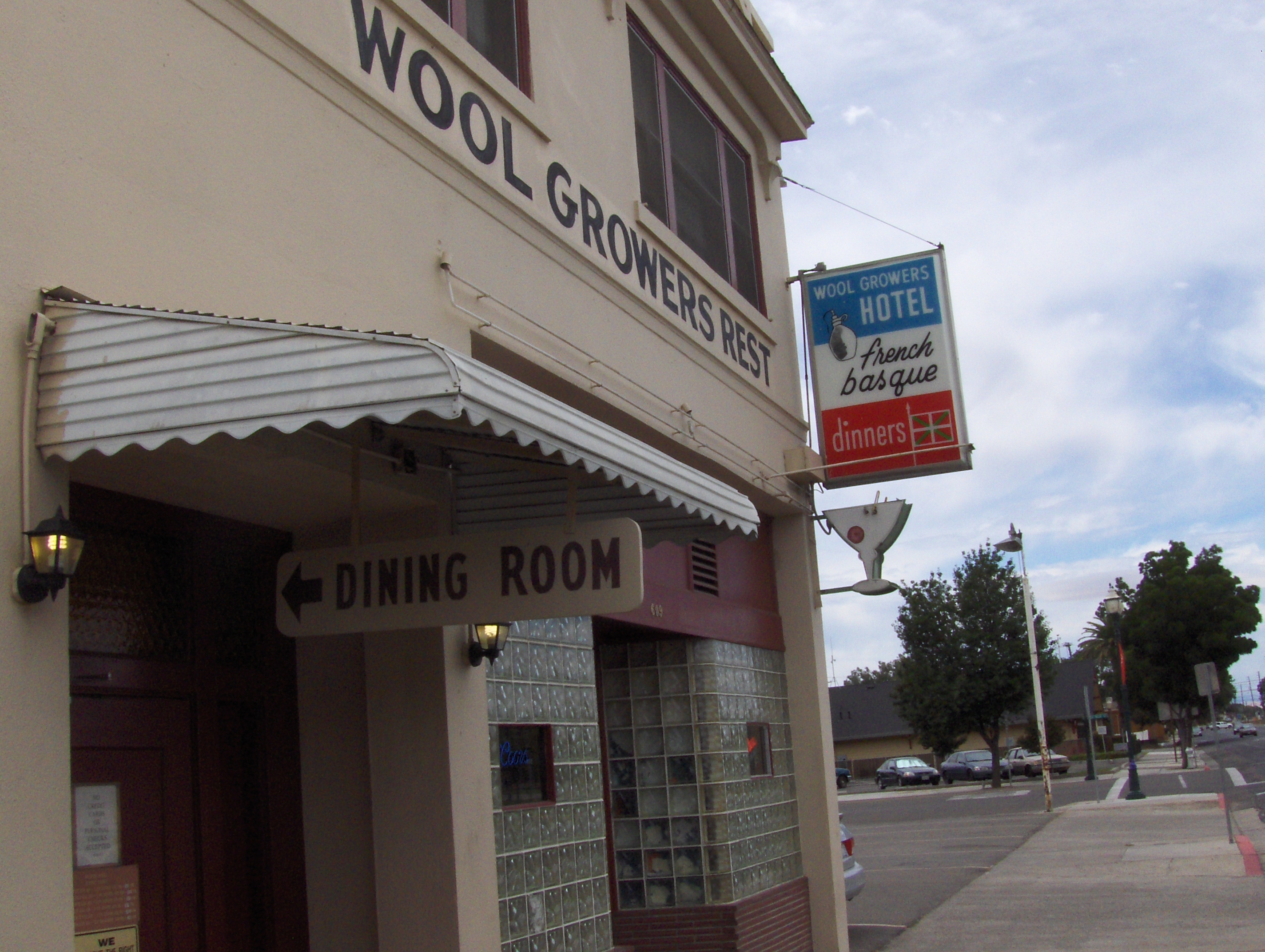
The Wool Growers restaurant and hotel has fed and comforted weary travelers for more than a century.


I’ve lived most of my life in the Central Valley, and I’ve made more trips to the San Francisco Bay Area than I can count. From Fresno, I’ve often driven west on Highway 152 through Los Banos to get there. So when I think about Los Banos, a town of about 35,000 people in southwestern Merced County, my knowledge is mostly limited to a brief drive down the 152 strip. I know which Chevron has the cleanest bathrooms and which local diner has the cheapest two-egg breakfast plate, but that’s about it.

This past summer, while working as an intern for KQED Public Radio, I got to see a little piece of Los Banos that I never knew existed. As part of The California Report magazine’s “hidden gems” themed show for the Fourth of July weekend, I visited the historic Wool Growers Restaurant, where they’ve served family style French Basque cuisine since the 1890s. The restaurant draws locals from all over the west side of the Valley, including tiny farm towns like Dos Palos, Firebaugh, Gustine, and Crow’s Landing. It also attracts many curious travelers and some celebrities. (Multiple people told us about how much NFL commentator and coaching great John Madden just loves the place.)

Wool Growers, on the corner of 7th and H streets.

My colleague, Central Valley bureau chief Sasha Khokha, came up with the idea for the radio feature. She had always heard about the food at Wool Growers and wanted to try it, so when the hidden gems show came along it was a perfect fit. It was about five weeks into my ten-week internship, so we decided that I would take the lead on the sound gathering and interviewing, and Sasha would also record some sound as a backup. Also, since I was an intern, I couldn’t voice the piece on the air myself, so we decided that Sasha would be a character in the story that narrated the experience while we were eating and working. I was nervous throughout the reporting process, but the assignment turned out to be a natural choice for a novice like me.

From the moment Sasha and I walked in, we were surrounded by great sound and colorful characters. I interviewed our waitress, who was one of the owners; a traveler who was there for the first time; a traveler who comes back every time he comes through town; a local father and son who take an afternoon off from their farm work once a month to treat each other to a feast for lunch; and of course, Sasha. She interviewed a second waitress, who was related to the owners, and two groups of locals who also frequent the place. I had no shortage of great material to choose from when putting together my final script.

Here’s the link to the final radio story, voiced by Sasha. With the piece, I earned my very first credits for writing and producing a radio story. I also stuffed my face with a TON of Basque food.